
Crouching Woman
<p><em>Crouching Woman</em> is one of five pastel studies for Eugène Delacroix’s monumental painting <em>The Death of Sardanapalus</em> (1827; Musée du Louvre, Paris), which helped establish his reputation as the leader of the French Romantic movement. Of the few pastels that Delacroix produced, this is the only group that can be related to a single painting. Inspired by an 1821 play by the English Romantic poet Lord Byron, the canvas dramatically depicts the last king of the Assyrians. Reclining on his bed moments before his own suicide, the king gazes passively at his wives, concubines, and livestock as they are slain by his order to prevent their slaughter by the enemy army that has just defeated them. In this expressive image of one of the concubines, Delacroix convincingly captured the horror of the moment. With a sure, sweeping line, he described the rhythmic, taut posture of a figure recoiling from a blow or the stab of a knife. Although this powerful figure is significantly truncated in the final painting, the pastel provides insight into Delacroix’s creative process, and its sensual drama is representative of the Romantic period.</p>
Catalogue
- Year
- 1827
- Dimensions
- 24.6 × 31.4 cm (9 11/16 × 12 3/8 in.)
- Collection
- Art Institute of Chicago
- Artist
- Eugene Delacroix
Artist

Painting
Born in 1789 in Paris, French Romantic painter Eugéne Delacroix received his early training from Pierre Guérin in a classicist vein. While that approach would have little effect on Delacroix’s ultimate artistic development, it was through this connection that he met the painter Théodore Gericault, creator of the masterwork Raft of the Medusa, 1818–19, a work for which Delacroix posed. Ultimately, Delacroix drew most of his inspiration from the plethora of art available for him to study at the Louvre. He was also exposed to a wide of array of literature, including the writing of Shakespeare, Byron, and Scott. It was those literary sources that would ultimately be the catalyst to Delacroix’s full embrace of Romanticism, despite the growing popularity of Neoclassicism.
Charenton-Saint-Maurice, France
Full artist profile →More
More by Eugene Delacroix
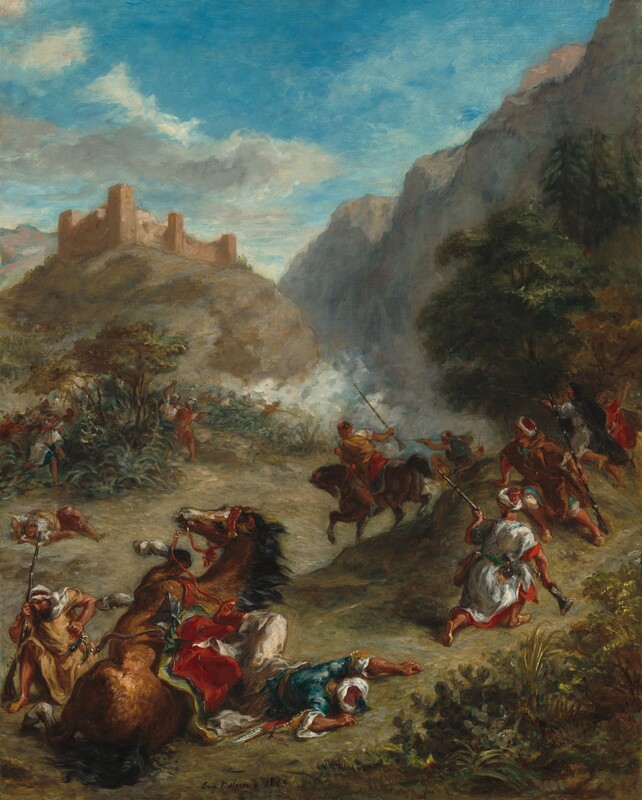
Arabs Skirmishing in the Mountains
1863 · oil on canvas
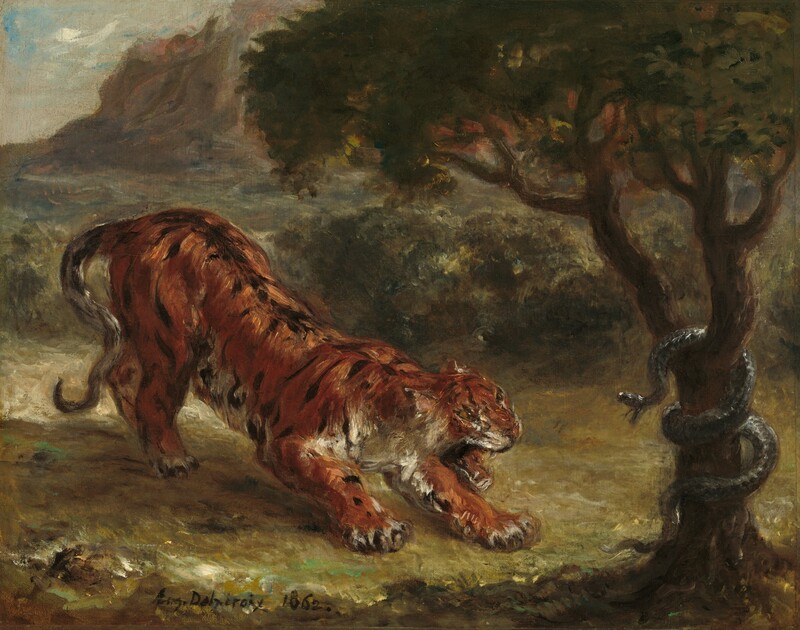
Tiger and Snake
1862 · oil on canvas

Lion Hunt
1860 · Oil on canvas

Sketchbook from the Artist's Trip to Germany
1855 · Graphite and watercolor on paper
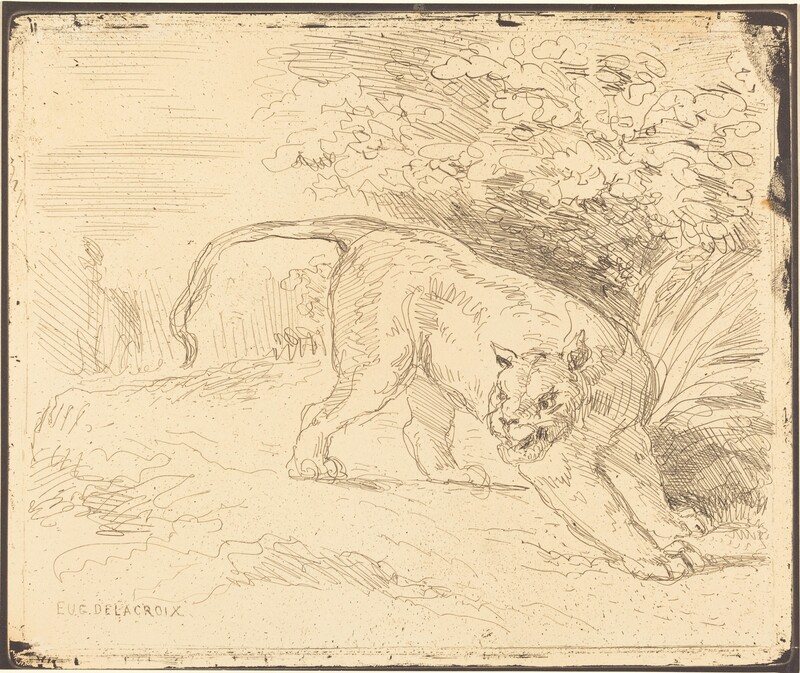
Tigre en arrêt
1854 · cliché-verre on wove paper

Study for Marphise and the Mistress of Pinabel
1852 · Graphite on tan wove paper, tipped onto board
Record
Verified by WattsOS- Artist
- Eugene Delacroix
- Year
- 1827
- Dimensions
- 24.6 × 31.4 cm (9 11/16 × 12 3/8 in.)
- Watts ID
- WW-1827-132879
Source
- Collection
- Art Institute of Chicago
- Source
- aic
- Reference
- View at source
- Status
- verified