
Arlésiennes (Mistral)
<p>One of seventeen canvases that Paul Gauguin completed during a brief and tumultuous visit with Vincent van Gogh in Arles, this powerful and enigmatic painting depicts the public garden directly across from Van Gogh’s residence, the “Yellow House.” Not only is the careful planning of the composition in marked contrast to the spontaneity seen in Van Gogh’s depiction of the same scene (State Hermitage Museum, Saint Petersburg), but everything about the painting—its large, flat areas of color; arbitrary handling of space; and enigmatic silhouettes—also exemplifies the deliberateness with which Gauguin sought pictorial harmony and symbolic content in his work. Here four women wrapped in shawls slowly stroll through the garden. The two closest to the viewer avert their gazes and curiously cover their mouths. Their somber outlines echo the two orange cones, which probably represent shrubs wrapped against the frost. The bench along the upper-left path rises steeply, defying logical perspective. Equally puzzling is the mysterious bush on the left, in which Gauguin consciously embedded forms that suggest eyes and a nose, creating the impression of a strange, watchful presence. With its aura of repressed emotion and elusive meaning, <em>Arlésiennes (Mistral)</em> explores the ambiguities, mysteries, and emotions that Gauguin believed underlie appearances.</p>
Catalogue
- Year
- 1888
- Medium
- Oil on jute canvas
- Dimensions
- 73 × 92 cm (28 3/4 × 36 3/16 in.); Framed: 97.5 × 116.6 × 8 cm (38 3/8 × 45 7/8 × 3 1/8 in.)
- Collection
- Art Institute of Chicago
- Artist
- Paul Gauguin
Artist

Painting
Eugène Henri Paul Gauguin was a French painter, sculptor, printmaker, ceramist, and writer, whose work has been primarily associated with the Post-Impressionist and Symbolist movements. He was also an influential practitioner of wood engraving and woodcuts as art forms. While only moderately successful during his lifetime, Gauguin has since been recognized for his experimental use of color and Synthetist style that were distinct from Impressionism.
Full artist profile →More
More by Paul Gauguin

Le Sourire
1952 · Collotype and letterpress in black on various cream wove papers, contained within commercially printed cream textured paper wrapper

Marehurehu: Between Day and Night (Marehurehu: Entre le Jour et la Nuit)
1925 · Book with facsimile woodcuts on cream wove paper
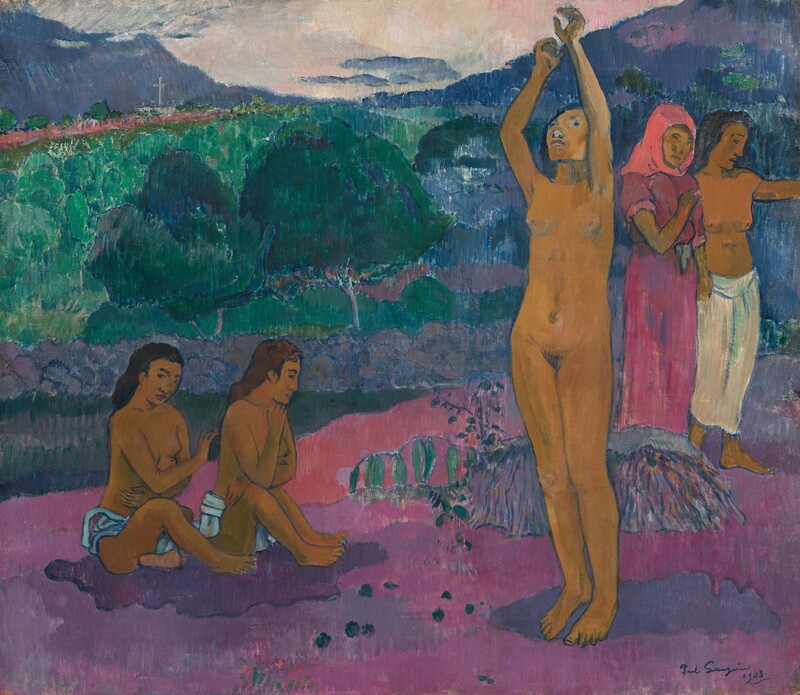
The Invocation
1903 · oil on canvas

Angel, Peacock, and Three Tahitians
1902 · Transfer drawing in brown and black ink on cream Japanese paper
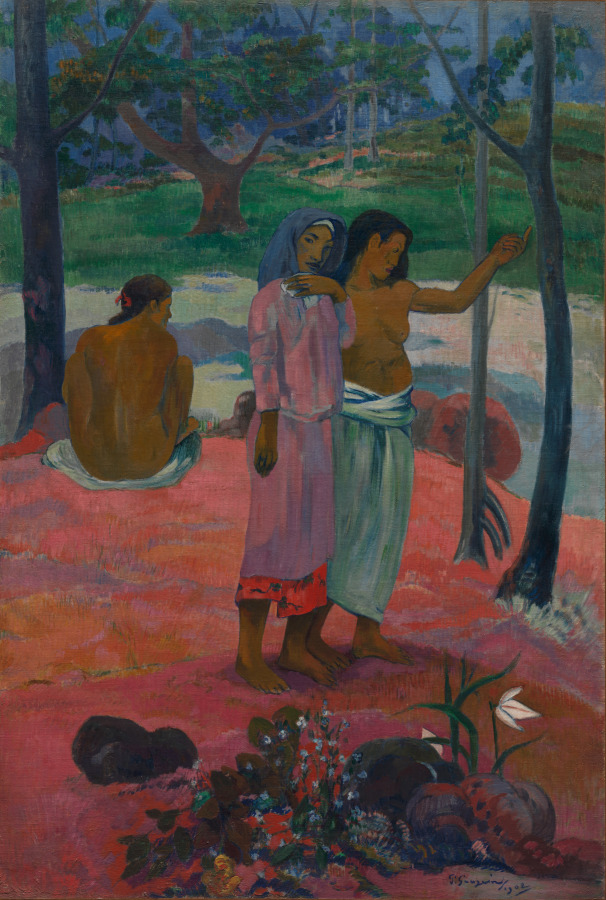
The Call
1902 · oil on fabric

Seated Female (related to the painting Sister of Charity)
1902 · Transfer drawing in black ink on ivory wove paper
Record
Verified by WattsOS- Artist
- Paul Gauguin
- Year
- 1888
- Medium
- Oil on jute canvas
- Dimensions
- 73 × 92 cm (28 3/4 × 36 3/16 in.); Framed: 97.5 × 116.6 × 8 cm (38 3/8 × 45 7/8 × 3 1/8 in.)
- Watts ID
- WW-1888-013919
Source
- Collection
- Art Institute of Chicago
- Source
- aic
- Reference
- View at source
- Status
- verified