
<p>Albert Bierstadt is best remembered for his paintings of the American West, but during his early career, the ambitious artist also created New England landscapes, particularly of the White Mountains, as seen here. When this painting was first exhibited in 1863, critics declared it Bierstadt’s “best work” and praised the artist’s deft contrast of “light and shade,” which brought a heightened realism to the image. Bierstadt’s affinity for the White Mountains mirrored a growing interest in the region as one of America’s premier tourist attractions. Photographs of the area from the 19th century suggest that Bierstadt utilized landscape elements from the Flume, a popular New Hampshire tourist site, in this imaginary composition.</p>
Catalogue
- Year
- 1863
- Medium
- Oil on canvas
- Dimensions
- 111.8 × 91.4 cm (44 × 36 in.)
- Collection
- Art Institute of Chicago
- Artist
- Albert Bierstadt
Artist

Painting
Among the most dramatic works of America’s first century, Albert Bierstadt’s vast, sweeping canvases captured the rugged sublimity of the Western landscape, and memorialized the heady era of manifest destiny.
Full artist profile →More
More by Albert Bierstadt
Sketchbook of Columbus Subjects: Caravels, Figures, Heraldry, and Accessories
1891 · Drawings in graphite on off-white wove paper with gilt edges, bound in a leather cover

Alaskan Coast Range
1889 · oil on paper mounted on paperboard
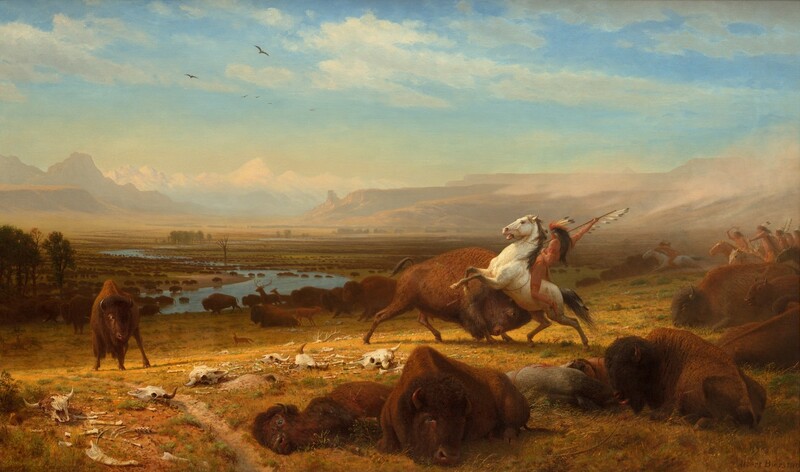
The Last of the Buffalo
1888 · oil on canvas

Gates of the Yosemite
1882 · oil on paper mounted on canvas

Sketchbook
1881 · bound volume of forty-six graphite drawings
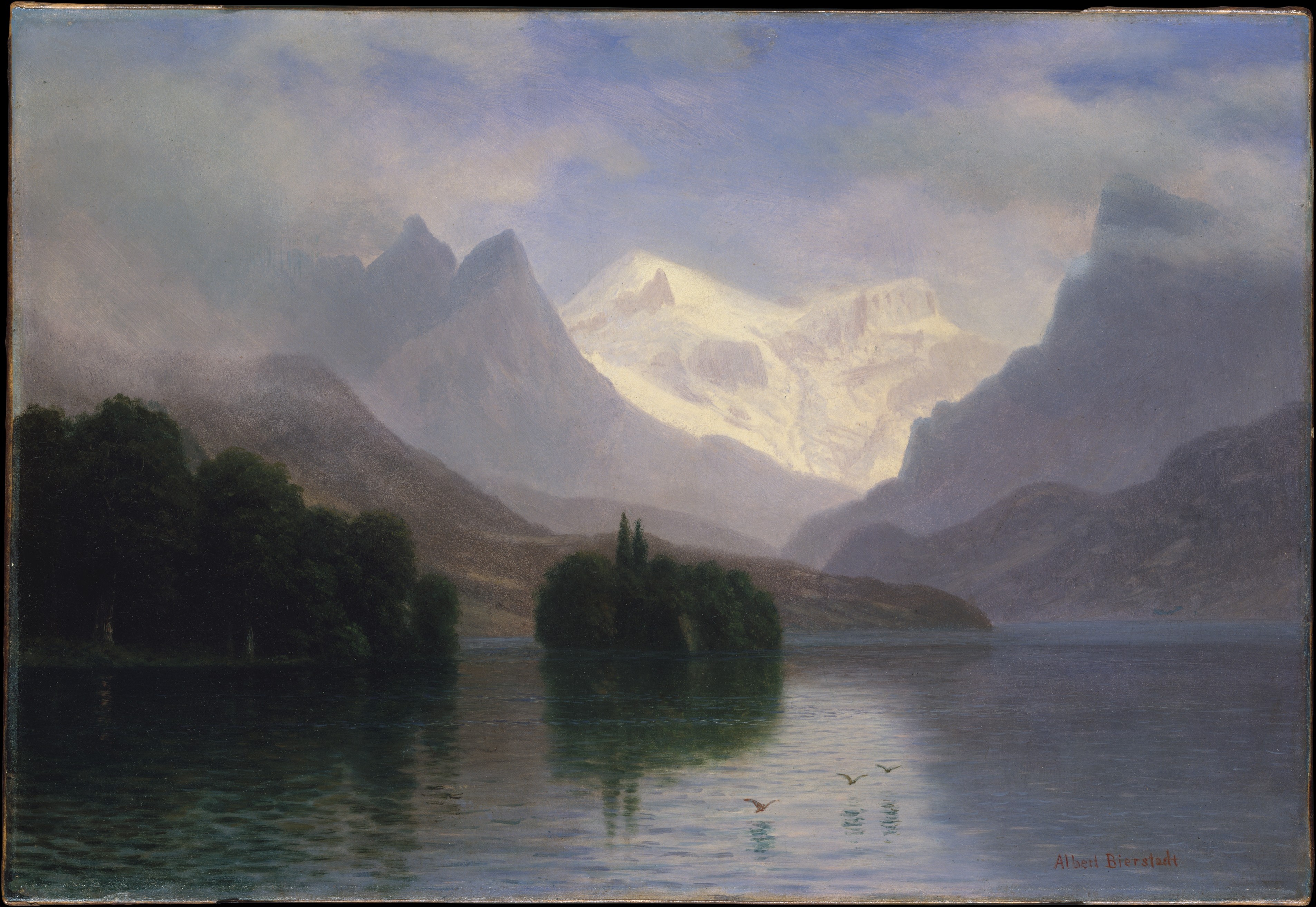
Mountain Scene
1880 · Oil on paper
Record
Verified by WattsOS- Artist
- Albert Bierstadt
- Year
- 1863
- Medium
- Oil on canvas
- Dimensions
- 111.8 × 91.4 cm (44 × 36 in.)
- Watts ID
- WW-1863-013909
Source
- Collection
- Art Institute of Chicago
- Source
- aic
- Reference
- View at source
- Status
- verified