
Stoke-by-Nayland
<p>“What say you to a summer morning?” John Constable wrote of this painting in a letter to a friend. Even after many years living in London, Constable continued to portray the countryside, dear to him from boyhood. Stoke-by-Nayland lies a few miles from his native village of East Bergholt in Suffolk. In this view, he divided the canvas between a brilliant, airy vista toward the hamlet on the left and a shady, tunnel-like country lane leading off to the right. Constable explained in his letter that the painting depicted a specific time, a morning in “July or August, at eight or nine o’clock, after a slight shower during the night, to enhance the dews in the shadowed part of the picture.” The artist emphasized the abundance of water through his painting technique, flecking the surface with white highlights to create an effect of sparkling wetness. Here, the whole scene appears dewy, with a stream and puddles in the foreground and a central tree that droops from the weight of rainwater, emphasizing the fertile land.</p> <p>Painted as much with a palette knife as with brushes, <em>Stoke-by-Nayland</em> lacks the finish of pictures Constable exhibited publicly; it was meant as a full-scale sketch for a work that he never realized. Nonetheless, this canvas seems to capture Constable’s delight in freely scribbling and scraping the image into existence—what it lacks in detail it gains in atmosphere. The roughness of the surface evokes the textures of real landscape, and the coexistence of natural and built elements in the scene embodies an ideal of harmony indicative of Constable’s vision of rural England.</p>
Catalogue
- Year
- 1836
- Medium
- Oil on canvas
- Dimensions
- 126 × 169 cm (49 5/8 × 66 1/2 in.); Framed: 170.2 × 212.1 × 16.6 cm (67 × 83 1/2 × 6 1/2 in.)
- Collection
- Art Institute of Chicago
- Artist
- John Constable
Artist

Painting
John Constable was an English landscape painter in the Romantic tradition. Born in Suffolk, he is known principally for revolutionising the genre of landscape painting with his pictures of Dedham Vale, the area on the borderland of Suffolk and north Essex surrounding his home – now known as "Constable Country" – which he invested with an intensity of affection. "I should paint my own places best", he wrote to his friend John Fisher in 1821, "painting is but another word for feeling".
Full artist profile →More
More by John Constable
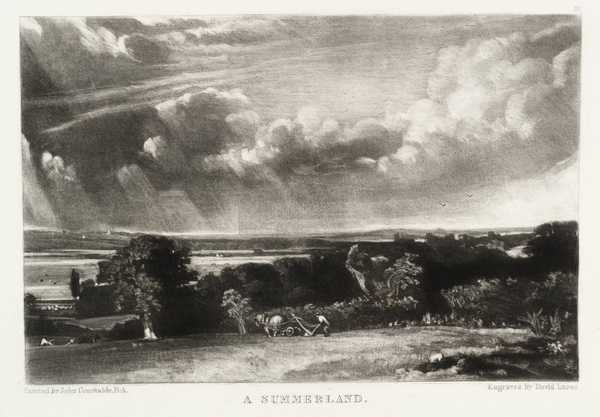
A Summerland
1855 · Mezzotint on paper
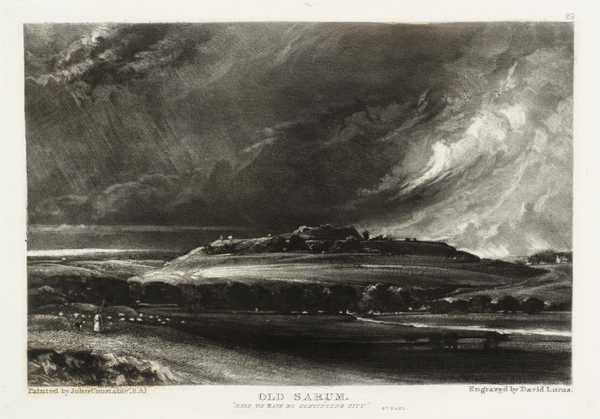
Old Sarum (second plate)
1855 · Mezzotint on paper
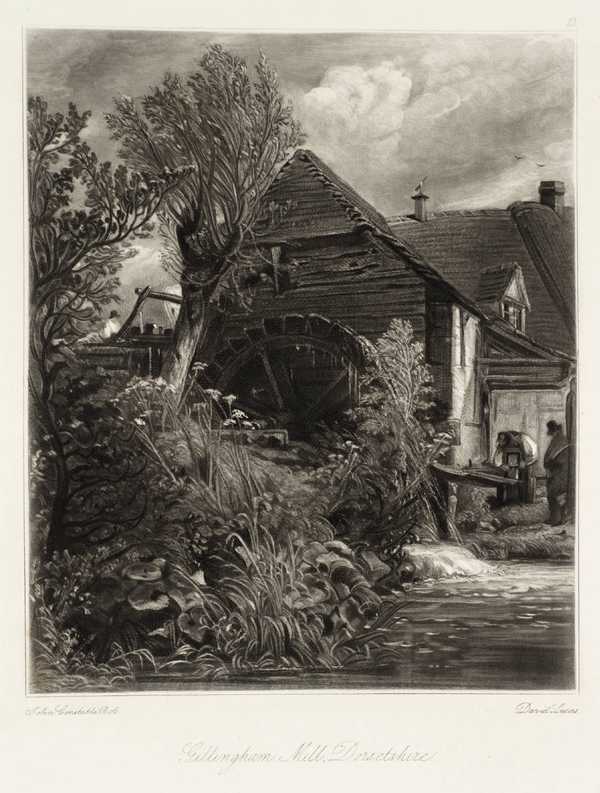
Gillingham Mill, Dorsetshire
1855 · Mezzotint on paper
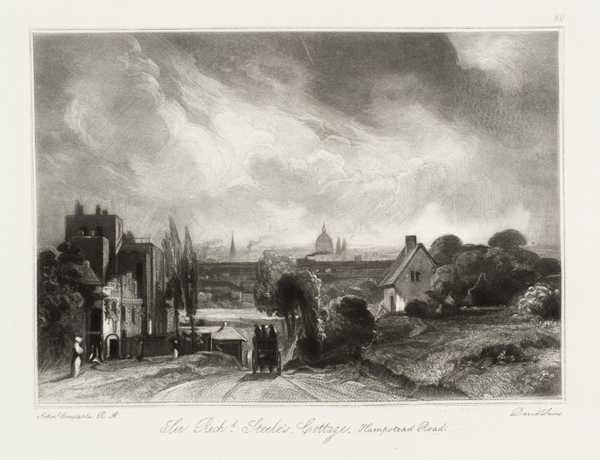
Sir Richard Steele’s Cottage, Hampstead Road
1855 · Mezzotint on paper
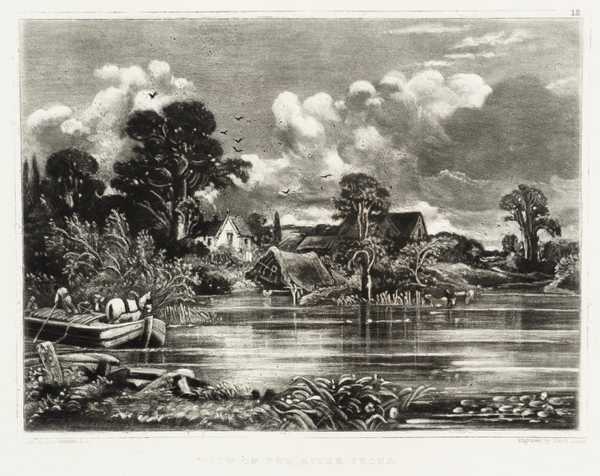
View on the River Stour
1855 · Mezzotint on paper
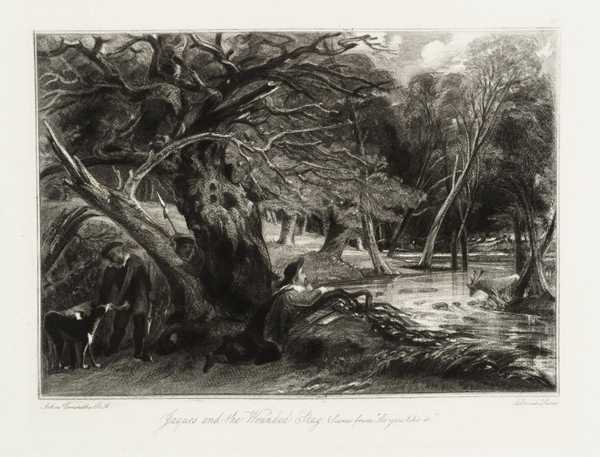
Jaques and the Wounded Stag
1855 · Mezzotint on paper
Record
Verified by WattsOS- Artist
- John Constable
- Year
- 1836
- Medium
- Oil on canvas
- Dimensions
- 126 × 169 cm (49 5/8 × 66 1/2 in.); Framed: 170.2 × 212.1 × 16.6 cm (67 × 83 1/2 × 6 1/2 in.)
- Watts ID
- WW-1836-013278
Source
- Collection
- Art Institute of Chicago
- Source
- aic
- Reference
- View at source
- Status
- verified