
Copy of the Title Page for "Inclytae Regiae Societati Londinensi"
<p>A gentleman-scholar with an intense interest in science, <a href="http://www.artic.edu/artists/36875/william-henry-fox-talbot">William Henry Fox Talbot</a> was one of the inventors of photography. His negative-positive process—using paper negatives to create potentially limitless prints—enabled the duplication and dissemination of images with relative ease. Among the many consequences of this new technology, it revolutionized the reproduction of art, as paintings, lithographs, and etchings could be made in reduced or enlarged sizes. For Talbot photography was intimately related to mass production, and in 1844 he set up the Reading Establishment, which printed his calotypes and published the world’s first commercial photographically illustrated book, <em>The Pencil of Nature</em>. This image, depicting the title page of a Royal Society of London publication featuring an address by Isaac Newton, reveals both Talbot’s reverence for this august scientific group and his interest in photography as an improvement on the traditions of print reproduction.</p>
Catalogue
- Year
- 1835
- Medium
- Salted paper print
- Dimensions
- Image: 19.5 × 14.1 cm (7 11/16 × 5 9/16 in.); Paper: 22.2 × 18.4 cm (8 3/4 × 7 1/4 in.)
- Collection
- Art Institute of Chicago
- Artist
- William Henry Fox Talbot
Artist

Photography
William Henry Fox Talbot was an English scientist, inventor, and photography pioneer who invented the salted paper and calotype processes, precursors to photographic processes of the later 19th and 20th centuries. His work in the 1840s on photomechanical reproduction led to the creation of the photoglyphic engraving process, the precursor to photogravure. He was the holder of a controversial patent that affected the early development of commercial photography in Britain. He was also a noted photographer who contributed to the development of photography as an artistic medium. He published The Pencil of Nature (1844–1846), which was illustrated with original salted paper prints from his calotype negatives and made some important early photographs of Oxford, Paris, Reading, and York.
Full artist profile →More
More by William Henry Fox Talbot

Untitled
1864 · Photoglyphic engraving employing resin ground

Wheat
1854 · Photoglyphic engraving
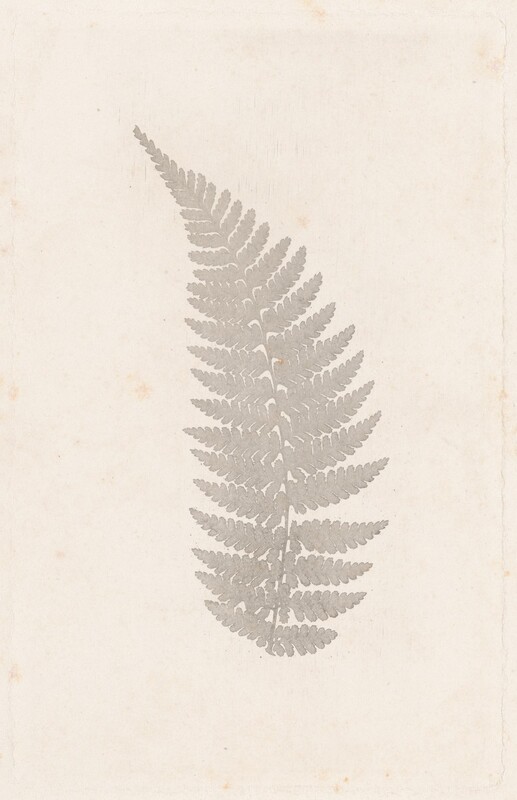
Fern
1852 · photogravure

Untitled
1852 · Photoglyphic engraving

Furness Abbey
1848 · Photoglyphic engraving

Branch of a Fern
1848 · Photoglyphic engraving made without a gauze or resin ground screen
Record
Verified by WattsOS- Artist
- William Henry Fox Talbot
- Year
- 1835
- Medium
- Salted paper print
- Dimensions
- Image: 19.5 × 14.1 cm (7 11/16 × 5 9/16 in.); Paper: 22.2 × 18.4 cm (8 3/4 × 7 1/4 in.)
- Watts ID
- WW-1835-024323
Source
- Collection
- Art Institute of Chicago
- Source
- aic
- Reference
- View at source
- Status
- verified