
The Fall of the Clyde, plate 18 from Liber Studiorum
<p>J. M. W. Turner is known primarily as a painter, but demonstrated his passion for landscape through printmaking in this mezzotint, which comes from a series of 71 prints called <em>Liber Studiorum (Book of Studies)</em>. Turner categorized the types of landscape with a lettering system at the top of each sheet: A (Architectural), H (Historical), M (Marine or Mountainous), P (Pastoral), and the more obscure EP (Epic Pastoral). The play of light and shade on the water, mountains, fields, and distant views exemplifies Turner’s approach to landscape as an emotive interpretation of reality rather than a topographically accurate one. He chose to use mezzotint, an engraving process that creates tonal gradations similar to the effects of oil painting, to emphasize these light and dark effects.</p>
Catalogue
- Year
- 1809
- Dimensions
- Image: 18.1 × 26.3 cm (7 3/16 × 10 3/8 in.); Plate: 20.9 × 29.1 cm (8 1/4 × 11 1/2 in.); Primary support: 25.9 × 36.2 cm (10 1/4 × 14 1/4 in.); Secondary support: 30.5 × 40.6 cm (12 1/16 × 16 in.)
- Collection
- Art Institute of Chicago
Artist

Painting
Joseph Mallord William Turner, known in his time as William Turner, was an English Romantic painter, printmaker and watercolourist. He is known for his expressive colouring, imaginative landscapes and turbulent, often violent marine paintings. His artistic style developed over his lifetime, moving away from Romanticism—bypassing the following rising style of Realism—and, instead, with his later works being a significant precursor of and presaging the later Impressionist and Abstract Art movements that arose in the decades after his death. He left behind more than 550 oil paintings, 2,000 watercolours, and 30,000 works on paper. He was championed by the leading English art critic John Ruskin from 1840, and is today regarded as having elevated landscape painting to an eminence rivalling history painting. In 1969 art historian Kenneth Clark wrote of Turner: "He was a genius of the first order—far the greatest painter that England has ever produced..."
Full artist profile →More
More by Joseph Mallord William Turner

Scene at Lutworth
1870 · Watercolor and gouache with scraping, over graphite, on cream wove paper, laid down on board
Queen Mab's Cave
1846 · oil on fabric

Approach to Venice
1844 · oil on canvas
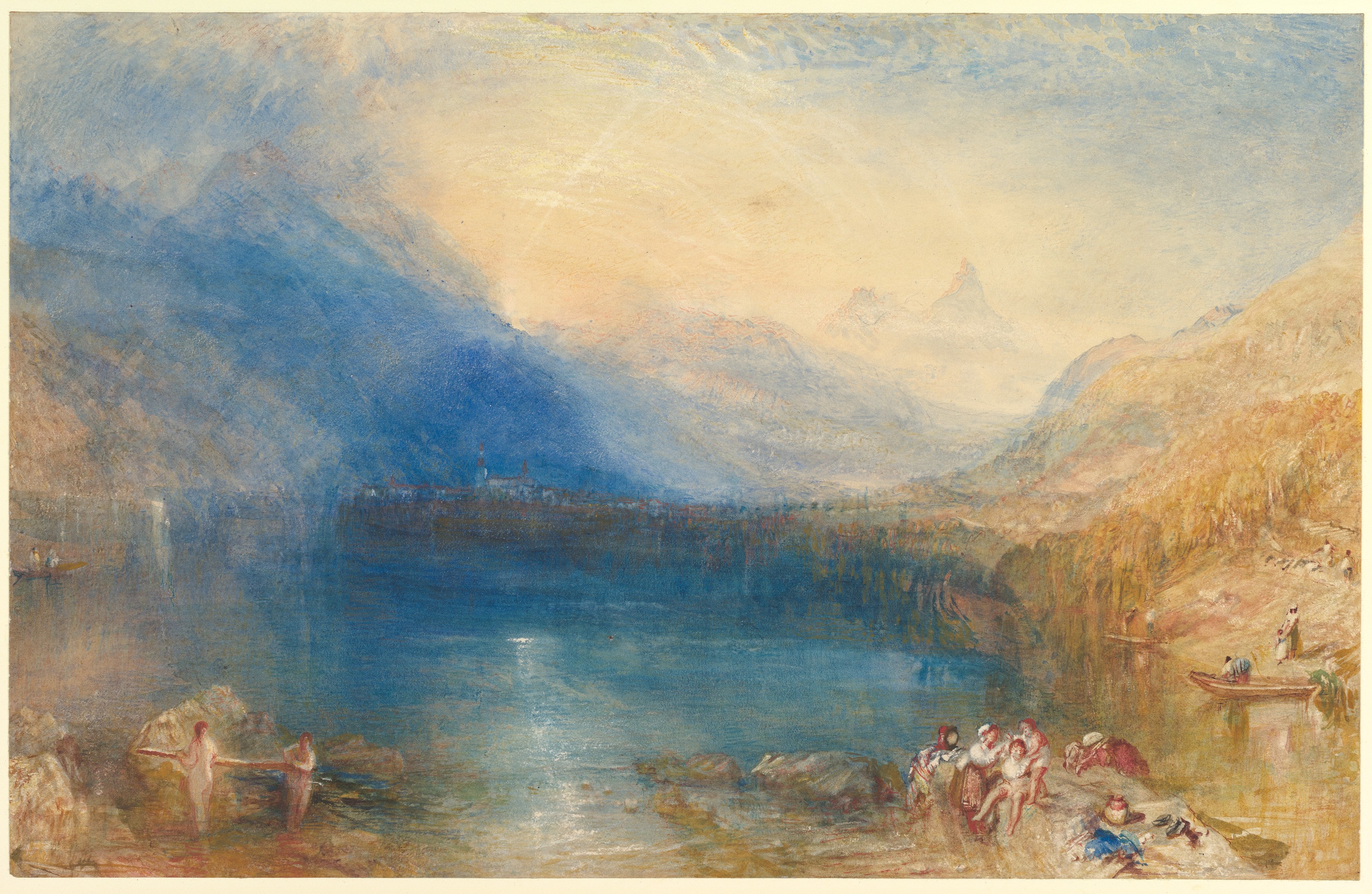
The Lake of Zug
1843 · Watercolor and bodycolor (gouache) with reductive techniques over graphite
Flüelen, from the Lake of Lucerne
1840 · watercolor with gouache and scratch-away

View of Lucerne
1840 · Watercolor, with scraping on white wove paper
Record
Verified by WattsOS- Year
- 1809
- Dimensions
- Image: 18.1 × 26.3 cm (7 3/16 × 10 3/8 in.); Plate: 20.9 × 29.1 cm (8 1/4 × 11 1/2 in.); Primary support: 25.9 × 36.2 cm (10 1/4 × 14 1/4 in.); Secondary support: 30.5 × 40.6 cm (12 1/16 × 16 in.)
- Watts ID
- WW-1809-111203
Source
- Collection
- Art Institute of Chicago
- Source
- aic
- Reference
- View at source
- Status
- verified