
Autumn Maples with Poem Slips
<p>In the seventeenth century Japanese aristocrats often composed and recited classical poetry while viewing foliage at appointed times of the year. During festivities, poems would be carefully written on patterned slips of paper (tanzaku) and tied to the branches of trees. In this screen, the premier court painter Tosa Mitsuoki described the inevitable transience of beauty by imagining the melancholy hours after the departure of the reveling courtiers, who had created poems with quotations of appropriate seasonal poetry from twelfth- and thirteenth-century anthologies inscribed on the narrow strips. The slips flutter in the gentle breeze, fastened to a maple bursting with red leaves in autumn.</p> <p>A companion screen, also in the Art Institute’s collection, depicts a cherry tree in full bloom in spring. The screens were either commissioned by or given to Empress Tōfukumon-in, a daughter of the Tokugawa shogun (military leader), who married the emperor Gomizunoo (reigned 1611–29). In an era otherwise marked by the feudal shogunate’s increasing control over imperial prerogatives, this royal couple encouraged a renaissance of courtly taste that nostalgically evoked early medieval aristocratic life. This pair of screens remains as evidence of this cultural flowering.</p>
Catalogue
- Year
- 1670
- Dimensions
- 144 × 286 cm (56 3/4 × 112 5/8 in.)
- Collection
- Art Institute of Chicago
- Artist
- Tosa Mitsuoki
Artist

More
More by Tosa Mitsuoki

Benzaiten, the Goddess of Music and Good Fortune
1700

Portraits of Three Famous Poets: Hitomaro (M) ・Ise (R) ・Komachi (L)
1691
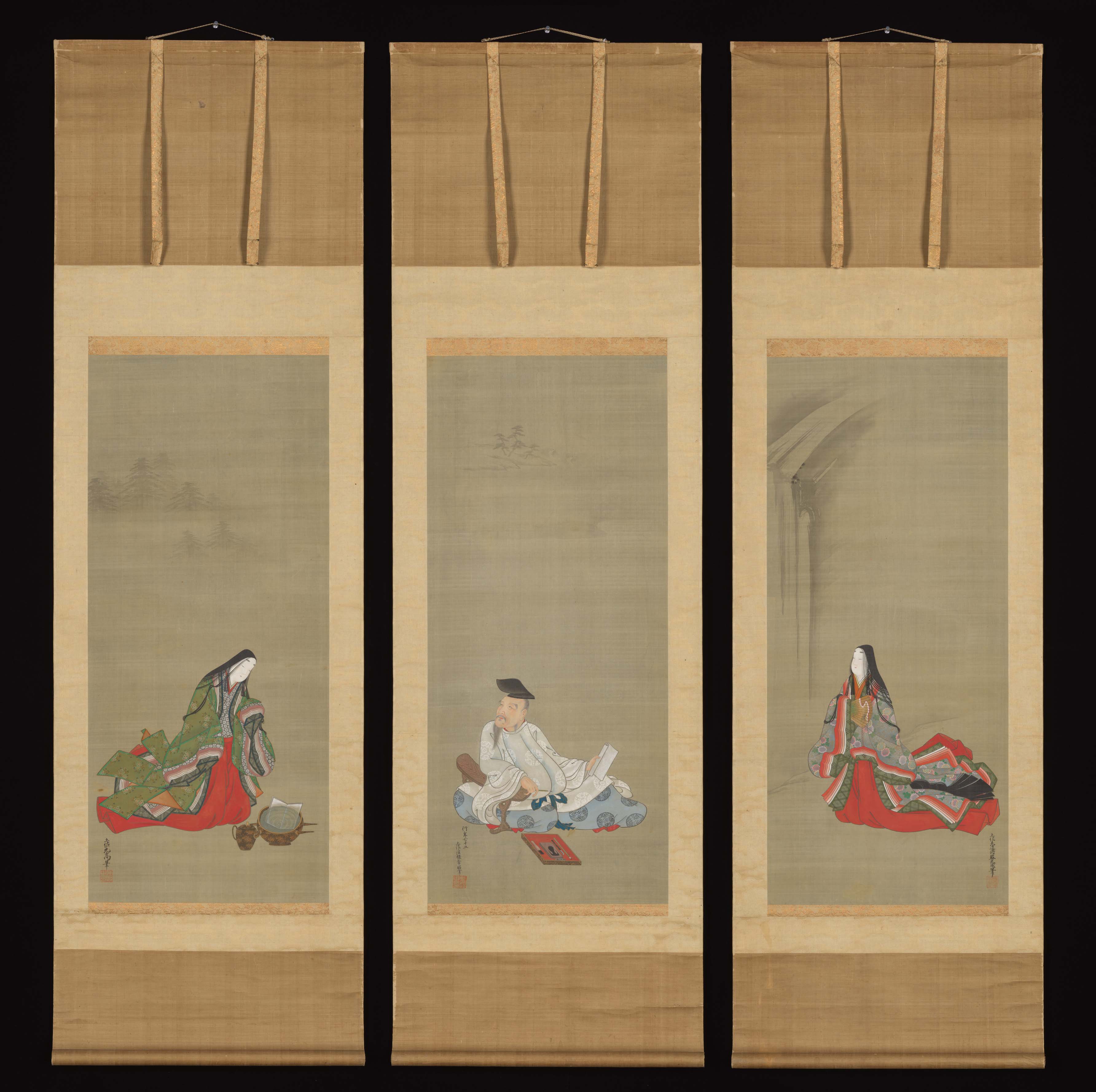
Portraits of Three Famous Poets: Kakinomoto no Hitomaro, Lady Ise, and Ono no Komachi
1691 · Triptych of hanging scrolls: ink, color, gold and silver on silk

Quail and Autumn Flowers
1683

Autumn Maples with Poem Slips
1675 · Six-panel screen (one of pair); Ink, colors, gold leaf, and gold powder on silk
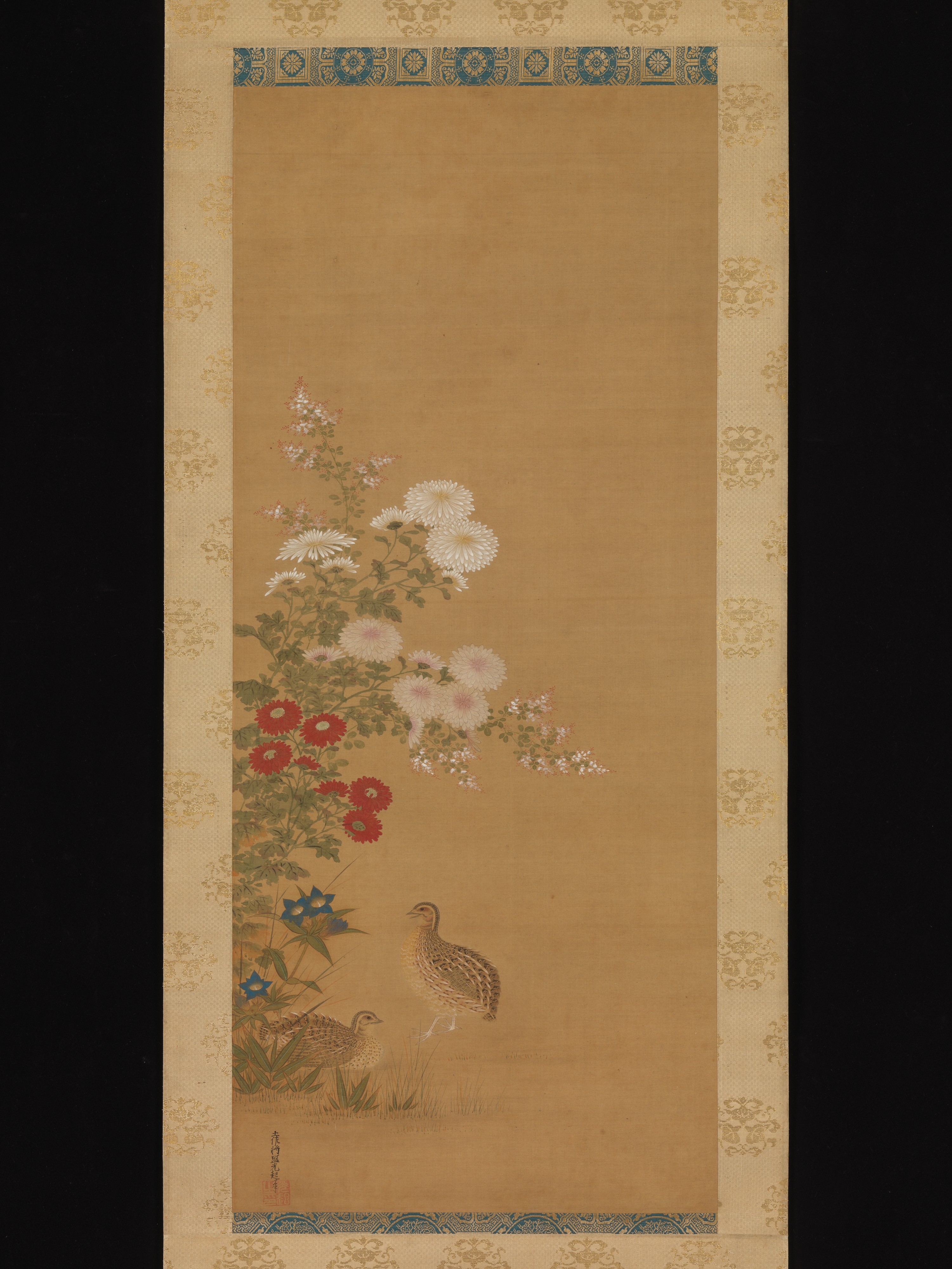
Quail and Autumn Flowers
1667 · Hanging scroll; ink and color on silk
Record
Verified by WattsOS- Artist
- Tosa Mitsuoki
- Year
- 1670
- Dimensions
- 144 × 286 cm (56 3/4 × 112 5/8 in.)
- Watts ID
- WW-1670-014994
Source
- Collection
- Art Institute of Chicago
- Source
- aic
- Reference
- View at source
- Status
- verified