
Ceres and Phytalus
<p>Salvator Rosa produced 17 large etchings in the early 1660s, frequently adopting mythological lore peppered with classical literature. <em>Ceres and Phytalus</em> deliciously celebrates the fig, of which Rosa was particularly fond. Phytalus, a king of Attica, is said to have given the goddess Ceres shelter on her journey to find her daughter Proserpina, whom Pluto had abducted into the underworld. Rosa’s inscription reads, “Here the hero Phytalus had received Ceres into his house, on whom she first bestowed the seeds of the sacred fruit which mortals call the FIG.” This honeyed crop subsequently became a staple of Mediterranean cuisine.</p>
Catalogue
- Year
- 1657
- Dimensions
- Image/plate: 35.2 × 23.6 cm (13 7/8 × 9 5/16 in.); Sheet: 46.4 × 33.6 cm (18 5/16 × 13 1/4 in.)
- Collection
- Art Institute of Chicago
- Artist
- Salvator Rosa
Artist

Painting
Salvator Rosa is best known today as an Italian Baroque painter, whose romanticised landscapes and history paintings, often set in dark and untamed nature, exerted considerable influence from the 17th century into the early 19th century. In his lifetime, he was among the most famous painters, known for his flamboyant personality, and regarded as an accomplished poet, satirist, actor, musician and printmaker. He was active in Naples, Rome, and Florence, where on occasion he was compelled to move between cities, as his caustic satire earned him enemies in the artistic and intellectual circles of the day.
Full artist profile →More
More by Salvator Rosa

Saint William of Maleval
1780 · Etching in sanguine on ivory laid paper

Apollo and the Cumean Sibyl
1780 · Etching on ivory laid paper

Polycrates' Crucifixion
1664 · Oil on canvas

Polycrates and the Fisherman
1664 · Oil on canvas

Dream of Aeneas
1663 · Etching on ivory laid paper
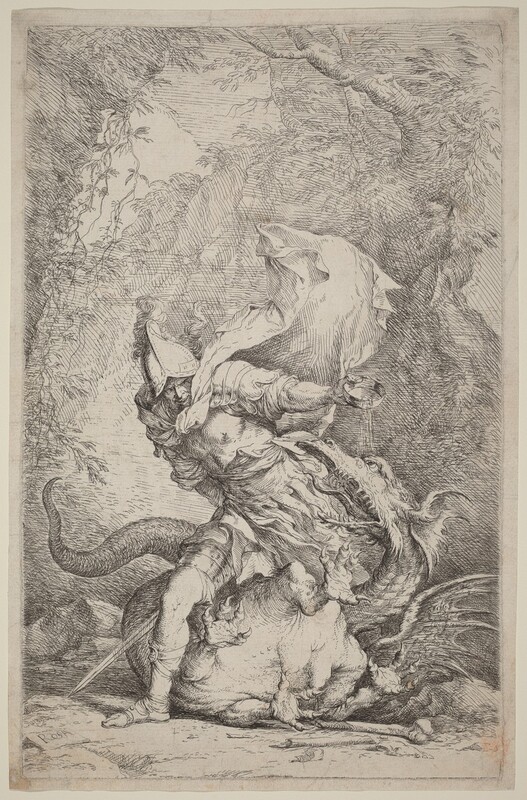
Jason and the Dragon
1663 · etching and drypoint
Record
Verified by WattsOS- Artist
- Salvator Rosa
- Year
- 1657
- Dimensions
- Image/plate: 35.2 × 23.6 cm (13 7/8 × 9 5/16 in.); Sheet: 46.4 × 33.6 cm (18 5/16 × 13 1/4 in.)
- Watts ID
- WW-1657-113207
Source
- Collection
- Art Institute of Chicago
- Source
- aic
- Reference
- View at source
- Status
- verified